Short-term rental insurance · Australia · 2026
Most Australian hosts are carrying two policies that do not quite meet in the middle. On one side sits AirCover, which Airbnb provides free and which Airbnb itself says is not insurance. On the other sits a home or landlord policy written for a family on a twelve-month lease, not a stream of weekend guests.
The short answer on short-term rental insurance in Australia (the thing most hosts type in as "Airbnb insurance"): you need a policy written specifically for short stays. AirCover for Hosts reimburses guest damage up to US$3 million and carries US$1 million of liability cover, but Airbnb's own help pages say it "is not a substitute for personal insurance" (Airbnb Help Centre, 2026). A dedicated short-stay policy without building cover costs about $550 to $600 a year in Queensland (EBM RentCover, premiums set 20 October 2025; Terri Scheer, 2026).
This guide walks through what AirCover does and does not do, why a standard policy can leave you exposed, what the dedicated products actually cover, and the two Queensland-specific wrinkles: body corporate apartments and coastal weather. It replaces our earlier landlord insurance article. If a guest has already damaged your place, start with our Airbnb damage claims guide instead.
Key takeaways
Covers guest damage to US$3 million and liability to US$1 million, and only applies to Airbnb bookings. Airbnb Help Centre, 2026
Allianz, Budget Direct and Youi each state on their own websites that standard landlord cover does not extend to short stays or Airbnb.
EBM RentCover and Terri Scheer cover guest damage, loss of rent to $50,000 and $20 million of public liability.
In Queensland the body corporate insures the building and $10 million of common-property liability, not your carpets, curtains, contents or lost income. Queensland Government, 2025
Ex-Tropical Cyclone Alfred generated 132,000 claims and $1.5 billion in insured losses in 2025, and flood cover is still optional on many policies. Insurance Council of Australia, 2026

No. AirCover for Hosts bundles US$3 million of Host Damage Protection with US$1 million of Host Liability Insurance, and every host gets it at no cost (Airbnb Help Centre, 2026). It is a good product. But the same page tells hosts to "talk to your insurer to see how, or if, your policy overlaps with AirCover for Hosts," and the Host Damage Protection Terms state plainly that they are "not an insurance contract" (Host Damage Protection Terms, last updated 1 August 2026).
So what is AirCover, if not insurance? Think of it as the first layer. It handles the common case, a guest who breaks something during an Airbnb stay, and it handles it well. Insurance is the layer underneath for everything else: storms, liability to non-guests, bookings from other platforms, and the claim AirCover declines because the photo was taken a week late.
Usually not, and the insurers say so themselves.
Allianz, landlord FAQIts landlord insurance "doesn't currently cover short-term rentals or Airbnb."
allianz.com.au, 2026
Budget DirectIt "does not insure homes used for short-term holiday rentals, such as those listed on Airbnb or Stayz."
budgetdirect.com.au, 2026
YouiIts landlord policy does not cover damage caused by tenants of short-term rental properties.
youi.com.au, 2026
The reason is simple. Canstar's 2026 guidance is that most standard home and contents policies will not cover paying guests "as this is considered a business activity" (Canstar, updated 27 February 2026). Finder makes the same point about landlord policies, which are built around a lease and tenants who stay for months (Finder, updated 23 December 2025).
Suncorp's own explainer is a useful middle case. It says a home policy gives "limited cover" when the whole home is let short-term, covering insured events and legal liability only. Its landlord policy, in that situation, has "no cover for theft or burglary by tenants or their guests" and "no cover for loss of rent or income" (Suncorp, 2023). Some cover, then, but not the cover a host actually claims on.
None of this calls for panic. It calls for one phone call. Since 5 October 2021, consumers taking out or renewing a personal insurance policy have had a duty under section 20B of the Insurance Contracts Act 1984 to "take reasonable care not to make a misrepresentation to the insurer" (Barry Nilsson Lawyers, 2021). If an insurer would have charged more or declined the risk had it known about short-stay letting, section 28 lets it reduce a payout to match.
Budget Direct puts the practical version on its FAQ page: if you start letting all or part of your home for short stays, "you must tell us as soon as possible." The Insurance Council of Australia's advice is the same: standard home and contents cover "can exclude coverage for short-term rentals," so check before you list (ICA, 2023).
Whichever duty applies to your policy, the fix is the same: tell the insurer before you list, and the question never comes up. An insurer that knows about the short stays and writes a policy for them is the whole point.
Video: Finder Australia on insurance for Australian Airbnb hosts, February 2026.
A short-stay policy covers the things AirCover and a standard landlord policy both skip: guest damage on any platform, loss of rent, theft by guests and public liability of $10 million to $20 million. The two dedicated products we see most often across the properties we manage are EBM RentCover ShortTerm and the Terri Scheer Short Stay policy. EBM's Queensland contents-only premium is $592 a year, set 20 October 2025 (EBM RentCover, 2025).
Here is how the main options compare, using the insurers' own published figures. Check the current Product Disclosure Statement before you buy; limits and excesses change.
| Policy | Guest damage | Loss of rent | Public liability | Theft by guests | Who it suits |
|---|---|---|---|---|---|
| EBM RentCover ShortTerm | Accidental, malicious and pet damage each to $70,000 ($350 excess) | To $50,000, nil excess | $20 million ($500 excess) | Within damage cover | Whole-property lets under six months; standalone contents available for strata |
| Terri Scheer Short Stay | Theft, loss or damage by guests and their invitees; pet damage to $5,000 | Up to 52 weeks, $50,000 per incident | $20 million | Yes | Properties run by a property manager (a condition of the policy) |
| Youi Landlord for Holiday Rentals | Malicious damage by non-tenants; check PDS for guest damage | Up to 10% of building sum, max 12 months | $20 million per claim | Not covered per Youi's page | Owners wanting a big-brand building policy with disclosed short-stay use |
| ShareCover (IAG) | Guest damage, vandalism | Temporary accommodation benefit | $10 million | To $25,000 | Legacy policies (pay-per-night and 6/12-month); Finder reports no new policies or renewals since 2025 |
Sources: EBM RentCover (2025), Terri Scheer (2026; PDS effective 10 August 2024), Youi (2026), Finder (16 April 2025).
Three details in that table deserve a second look.
Its Short Stay policy is only available for properties managed by a property manager (Terri Scheer, 2026), which tells you something about how insurers price the risk of a documented, professionally run property.
The ShortTerm product is not available if you are letting a room in your own home or sub-letting as a tenant (EBM RentCover, 28 October 2025).
The IAG brand many Australian hosts will recognise was reported by Finder in April 2025 to be no longer offering new policies or renewals, after withdrawing its six- and twelve-month short-stay products from 11 February 2025 (Finder, 2025). If you have a ShareCover certificate in a drawer, check the date on it and confirm its status with IAG.
The liability gap is the one investors underestimate. Airbnb's Host Liability Insurance is US$1 million, covers Airbnb stays, and excludes anything "done intentionally" (Airbnb Help Centre, 2026). Every product in the table above carries $10 million to $20 million of public liability, and none of them limit that cover to guests who booked through Airbnb. For the rest of the Queensland rulebook around hosting, see our Queensland short-term rental guide.
The body corporate's policy protects the building, not your unit's fit-out or your income. Under Queensland's body corporate legislation, the scheme must insure common property, body corporate assets and, in a building format plan, each building containing a lot, with public liability of at least $10 million for a single event (Queensland Government, last updated 9 July 2025). That $10 million covers the lobby, the lift and the pool deck. It does not follow a guest into your lounge room.

That exclusion list comes straight from Queensland's building insurance guidance (Queensland Government, 2025), and the Unit Owners Association of Queensland spells it out: lot owners need their own contents policy for carpets, curtains, blinds, lot-only air conditioners and personal belongings (UOAQ, 30 June 2025). EBM offers its ShortTerm cover as standalone contents where the building is insured by the body corporate (EBM RentCover, 2025), which is the usual fit.
One more question for apartment owners: if a guest damages common property, the body corporate will usually look to the lot owner. AirCover covers damage to your home and belongings, and its liability cover extends to common areas damaged by guests (Airbnb Help Centre, 2026). Ask your short-stay insurer the same question directly before you rely on it. If you are on the Gold Coast, our Gold Coast regulations guide covers the council side of apartment letting.
Storm cover, yes, and flood cover is worth checking on rather than assuming. In late February and March 2025 ex-Tropical Cyclone Alfred produced 132,000 insurance claims and $1.5 billion in insured losses across South East Queensland and northern New South Wales, the costliest event of the year (Insurance Council of Australia, 23 January 2026). Most of the early Alfred claims were storm-driven water damage and food spoilage rather than wind (ICA, 13 March 2025). A short-stay property carries exactly that loss profile, with a full fridge, a full linen cupboard and a booking calendar.
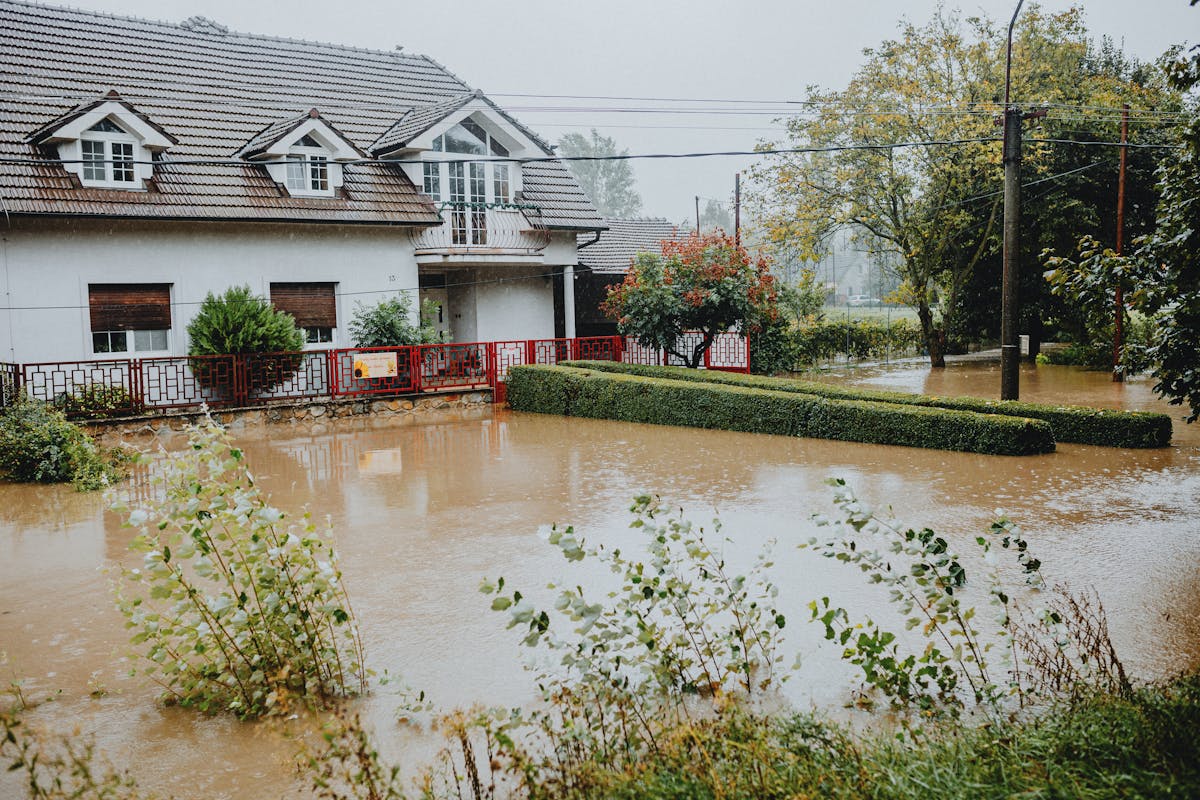
Alfred was the largest of four events that reached Queensland in 2025. The Insurance Council's 2025 tally lists four separate events that hit Queensland: North Queensland floods in January and February, Alfred in March, spring storms in October and November, and a Queensland and New South Wales hail outbreak in late November (ICA, 2026).
Here is the catch with flood. The Insurance Council explains that insurers offer flood cover four different ways: as a standard inclusion, as a standard inclusion you can opt out of, as an optional extra you opt in to, or not at all (ICA, 2026). Financial Rights Legal Centre adds that opting out of flood can also remove cover for rainwater run-off and storm surge, and that insurers may pause new cover once a flood is forecast (Financial Rights Legal Centre, updated March 2025). So the time to read that line in the PDS is a quiet Tuesday in September, not the week a cyclone is named.
When Alfred was tracking toward the coast in March 2025, the properties in our portfolio that recovered fastest were not the ones with the biggest sum insured. They were the ones whose owners had an inventory, current photos of every room, and a policy that named loss of rent. The insurer could settle from the file.

.png)